Welcome to WolkeGlove
Why You Should Be Wary of Brazil's Final Anti-dumping Ruling Involving Malaysia, Thailand, and China
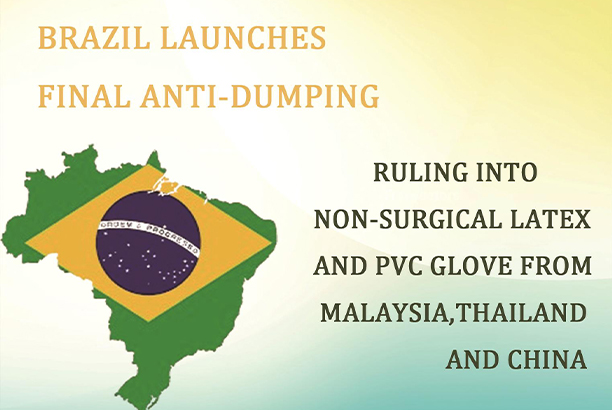
October 23, 2024-the Regulatory Executive Committee of the Brazilian Foreign Trade Commission (GECEX) issued Resolution No. 650 of 2024, making a final anti-dumping determination on non-surgical latex and PVC gloves originating from China, Malaysia and Thailand: terminating the anti-dumping investigation on the products involved in the above countries and imposing anti-dumping duties for five years at the amounts of US$ 3.9 China US$3.9 - US$20.83/thousand, Malaysia US$6.57 - US$33.52/thousand, and Thailand US$1.86 - US$15.83/thousand, respectively. Surgical gloves are not subject to the anti-dumping measures in this case; termination of the public interest assessment procedure established in Notice No. 3 of February 8, 2024, does not interfere with the final anti-dumping duties. The MERCOSUR tariff numbers for the products in question are 4015.12.00, 4015.19.00, and 3926.20.00. This resolution is effective as of the date of publication.
This final anti-dumping ruling and imposition of anti-dumping duties in Brazil involved investigations and preliminary rulings.
Back on July 23,2023, the Secretariat of Foreign Trade of the Ministry of Development, Industry, Trade and Services of Brazil issued Announcement No. 27 of 2023, stating that, in response to an application filed on April 27th, 2022 by a Brazilian domestic enterprise, Targa Medical S.A., an anti-dumping investigation was initiated into non-surgical latex and PVC gloves originating in China, Malaysia and Thailand. The products in question are medical, dental or veterinary gloves, made of latex (natural, synthetic or a mixture of both) or polyvinyl chloride.
February 9,2024-The Secretariat of Foreign Trade of the Brazilian Ministry of Development, Industry, Trade and Services (SEDICTA) issued Bulletin No. 3 of 2024, which made a positive preliminary ruling on the case. 20 February 2024, the Regulatory Executive Committee of the Brazilian Council of Foreign Trade (GECEX) issued Resolution No. 568 of 2024, which determined that non-surgical latex and PVC gloves originating from China, Malaysia, and Thailand should be subjected to Provisional anti-dumping duties for six months at US$4.83 to US$20.94/thousand gloves from China, US$15.30 to US$30.17/thousand gloves from Malaysia, and US$1.38 to US$14.25/thousand gloves from Thailand.On June 14, 2024, the Regulatory Executive Committee of the Brazilian Foreign Trade Commission (GECEX) issued Resolution No. 604 of 2024 adjusting the provisional anti-dumping duties on non-surgical latex and PVC gloves originating in China. Surgical Latex and PVC Gloves provisional anti-dumping duties from US$4.83 to US$20.94/thousand to US$2.89 to US$20.94/thousand, while the duty rates for the products involved in Malaysia and Thailand remain unchanged.
For why we should be alert to Brazil's final anti-dumping ruling on non-surgical latex and PVC gloves from three Asian countries, we should talk about what are non-surgical latex and PVC gloves,main application, advantages, industrial chain and main places of origin.
About non-surgical latex gloves
What are non-surgical latex gloves
As we know, non-surgical latex gloves are hand protection products made of natural latex and processed with other fine additives. After special surface treatment, they are comfortable to wear, have good elasticity, puncture resistance, and non-slip properties, and can effectively prevent contact with infectious and harmful substances.They are important hand protection tools in all walks of life.
2 main applications of non-surgical latex gloves
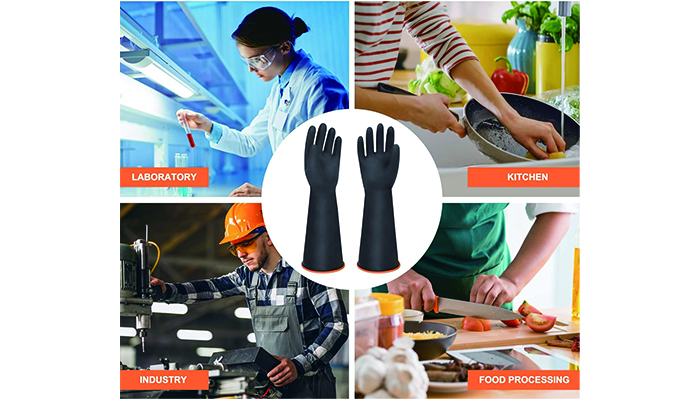
The non-surgical latex glove can be divided into food-grade latex glove, and industrial-grade latex according to the use.
The food-grade latex glove is suitable for catering and home cooking.But the industrial-grade latex glove is suitable for automotive manufacturing, aircraft assembly, laboratory use.
5 advantages of non-surgical latex gloves
-Natural latex, good elasticity and softness, easy to wear.
-Comfortable to wear, free of oxidants and silicone oil, grease and salination
-Stronger tensile strength, puncture resistance, not easy to break.
-Superior chemical resistance, resistant to certain acidity and alkalinity, resistant to some organic solvents, such as acetone.
-Low surface chemical residue, low ionic content, low particle content, suitable for strict clean room environment.
About PVC gloves
What are PVC gloves
PVC gloves, which are glove products made of polyvinyl chloride as the main raw material, can be disposable or reusable.

3 main applications of PVC protective gloves
-Oil-resistant protective gloves for workshop production
The surface of PVC dipped gloves is made of environmentally friendly oil, paste resin powder and other raw materials, which has excellent oil resistance to all kinds of oil and grease, and good anti-penetration, especially suitable for use in high-intensity environments. Greasy environment. PVC oil-resistant gloves are used to protect hand skin from allergic symptoms caused by irritating oily substances, such as itchy skin, acute dermatitis, acne, folliculitis, dry skin, rupture, body pigmentation and nail damage.
-Acid and alkali-resistant gloves for the chemical industry
The protective gloves impregnated with PVC have good resistance to acid and alkali and can resist the erosion of various strong acids, alkalis and common chemicals, these rubber impregnated gloves can prevent the damage of extreme chemicals, such as acids and alkalis, and their quality should be in line with the relevant regulations of the national industrial safety production. Acid and alkali labour protection gloves must have the property of not leaking, i.e. they must be airtight. Air leakage is not allowed under certain pressure.
- Fishing gloves for fishing boat operation
Due to their oil resistance, PVC-coated gloves are also waterproof and can be used for fishing operations at sea. They are also resistant to high and low temperatures and can be used as protection in cold working environments for fishing boat operations.
5 advantages of PVC gloves
Due to their excellent chemical resistance and abrasion resistance, PVC gloves can effectively protect the hands from chemicals, dirt and bacteria, while maintaining a certain degree of dexterity and comfort, suitable for a variety of operational needs, widely used in medical, catering, cleaning and industrial fields.
INDUSTRY CHAIN
-Industry Chain of Non-Surgical Latex Gloves
In terms of the industry chain, the upstream is the raw material supply chain, which mainly involves the collection of natural latex and the supply of chemical additives; the midstream players are the manufacturers of latex gloves, which adopt different manufacturing processes, such as the impregnation method and mold molding, to ensure the gloves' comfort and protection; and the downstream is the application field, including but not limited to the fields of laboratories, food processing, cleaning, and household, and so on.
-Industry Chain of PVC Gloves
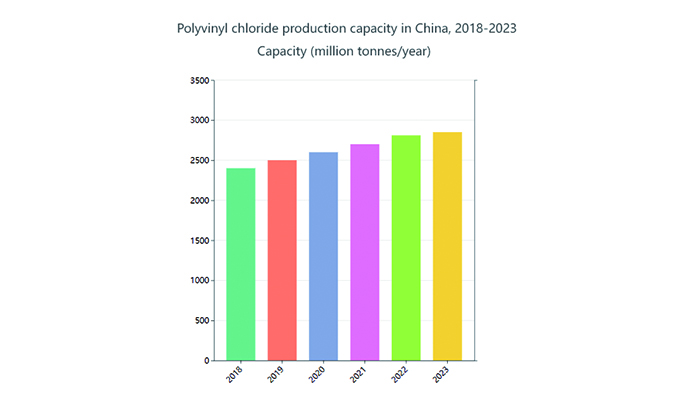
The upstream of PVC gloves is the raw material supply chain, including polyvinyl chloride, plasticiser, viscosity reducing agent, heat stabiliser, colouring agent, filler and so on. From the production of PVC raw materials to the manufacture of gloves, to sales and application, China has a complete industrial chain, which not only helps to reduce the cost of PVC gloves and improve the production efficiency, but also helps the products to respond quickly to market changes. China as a global PVC production country and one of the major consumer countries, PVC production capacity in recent years has been a steady growth trend, in 2022, 71 domestic PVC manufacturers, with a total production capacity of 28.1 million tonnes/year, which provides sufficient raw material security for the PVC gloves industry.
The midstream of PVC gloves is the production link, which transforms raw materials into PVC gloves through high-temperature melting, mold forming, and other processes; and the downstream is the application field, including but not limited to medical, food processing, industrial, housekeeping and many other fields.
MAIN COUNTRIES OF ORIGIN AND INDUSTRY GAINT
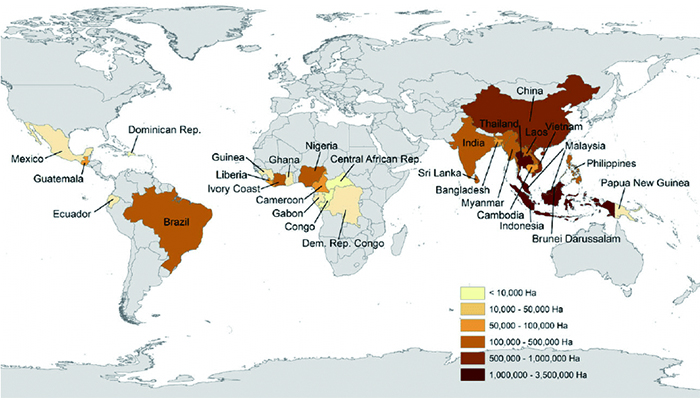
Global natural latex is mainly produced in Southeast Asia, Thailand, Malaysia, Indonesia is the main production place. Influenced by the supply of raw materials, the global production capacity of latex gloves is also concentrated in Southeast Asia, with Thailand, Malaysia and Indonesia as the main producing countries. Global latex gloves manufacturers mainly include Hartalega, WRP, Kossan, Top Glove, UG Healthcare, Supermax in Malaysia, Semperit in Austria, Medicom in Canada, KIRGEN in the United States and so on.
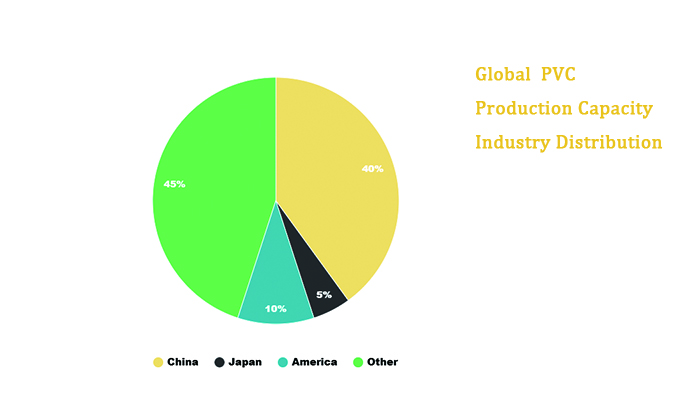
In the global market, the production capacity of PVC gloves is mainly concentrated in Mainland China, which is the world's largest producer of PVC gloves due to its highly developed petrochemical industry. PVC gloves manufacturers mainly include Bluesail,INTCO,Hongray,TOP GLOVE,Cofoe and so on.
NON-SURGICAL LATEX AND PVC GLOVE COMPANIES INVOLVED IN BRAZIL'S ANTI-DUMPING DUTIES ON MALAYSIA,THILAND AND CHINA
Brazil terminated the anti-dumping investigation and imposed anti-dumping duties for five years on the products involved from the above countries: China US$3.9-20.83/thousand, Malaysia US$6.57-33.52/thousand, and Thailand US$1.86-15.83/thousand.
At this time, Brazil's final anti-dumping ruling involves the following companies from Malaysia, Thailand, and China: Top Glove, TG Medica, Hartalega, Terang Nusa (Malaysia), Sentienx, Purnabina, Sri Trang, Demais empresas, Bluesail, Intco, and others.
IMPACT OF ANTI-DUMPING ON THE NON-SURGICAL AND PVC GLOVES MARKET
It is undeniable that anti-dumping measures as a whole have anti-competitive and protectionist overtones. Anti-dumping measures have a legitimate veneer of protectionism, often punishing trade practices under the label of opposing ‘unfair competition’. However, when anti-dumping measures are used skilfully, even ‘offensively’, by all WTO members, a vicious circle of global trade wars and retaliatory measures between trading partners is inevitable.
Although trade defence measures target products, they can have the effect of ‘hitting a target with a target’, i.e., the measures target the product in question, but the hit is often the whole industry related to the product in question, which in turn affects the development of related upstream and downstream industries.
-Rising costs:If Malaysia, Thailand, China's non-surgical and PVC gloves are subject to anti-dumping investigations by the Brazilian government and are subject to anti-dumping duties, this will lead to higher purchasing costs and reduce the profit margins of sellers. At the same time, participating in anti-dumping investigations and responding to anti-dumping duties involves complex legal procedures, and also requires a lot of time and resources, which undoubtedly increases the operating costs and burdens of sellers and buyers engaged in international trade.
-Decrease in market competitiveness: If anti-dumping duties are imposed, it may force the affected Malaysian, Thai and Chinese sellers to increase the prices of their products, thus reducing the market competitiveness of Malaysian, Thai and Chinese non-surgical and PVC gloves in the Brazilian market, resulting in a decrease in the volume of sales, which affects the turnover of the merchandise and the profitability of the enterprises, and even leads to the build-up of inventories.
-Impact on Merchandising: Anti-dumping can cause importers to suspend purchases or look for alternative products, affecting sellers' orders and sales plans. If accused of dumping and subject to anti-dumping duty penalties, it will also affect the seller's brand reputation and image, and the normal operation of the shop will be hampered due to the seizure of goods for investigation. These negative impacts may cause the platform to reduce the traffic weight of the seller's shop, and consumers will lose trust in the brand, affecting the sale of goods.
-Other negative impacts: Once the goods are labelled as anti-dumping, the enforcing authority will not only impose fines or seizure and other penalties on the seller, but also seize the relevant warehouses used for storing the goods; if it is an own overseas warehouse, the seller's sales of other goods will also be affected; if it is a co-operative third-party overseas warehouse, it will affect the normal development of the business of the co-operative warehouse, which can be said to be a matter of a hair affecting the whole body.