Welcome to WolkeGlove
5 Effective Cut-Resistant Materials You Should Know About Gloves
Labor gloves are a kind of personal protective equipment used to protect the safety of workers' hands in production. According to the different protective functions, labor protection gloves are also divided into anti-cut, anti-chemical, waterproof, cold, arc-proof, shockproof, and many other types, of which anti-cut gloves are more widely used. Anti-cut gloves have strong cut and wear resistance, and can effectively protect the user's hands to avoid sharp objects such as stabbing, cutting, and stabbing, widely used in meat splitting, glass processing, metal processing, fire rescue, and other industries, are an important part of production safety.
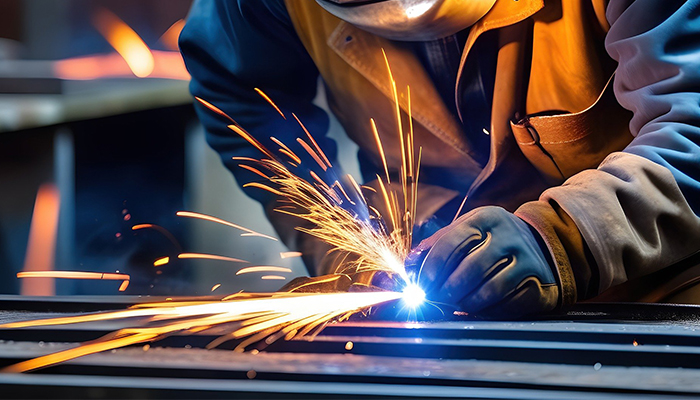
Why is it difficult to be cut with anti-cutting gloves?
How exactly does it protect staff hands from cuts and lacerations?
The answer is all in the yarn!
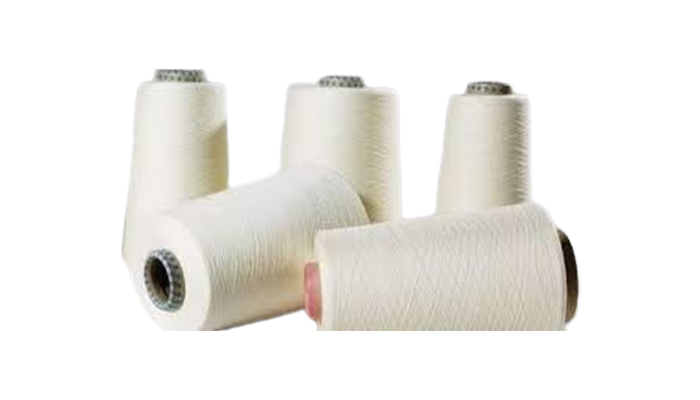
Typically cut-resistant gloves or cuffs are knitted from a cover yarn with some filler material, such as nylon, polyester, or spandex, to give the glove a more flexible core. The cover yarns that provide the gloves with higher cut protection can be made from any of several different materials, or even a combination of materials, to provide a lightweight, comfortable fit while maintaining a certain level of cut protection.
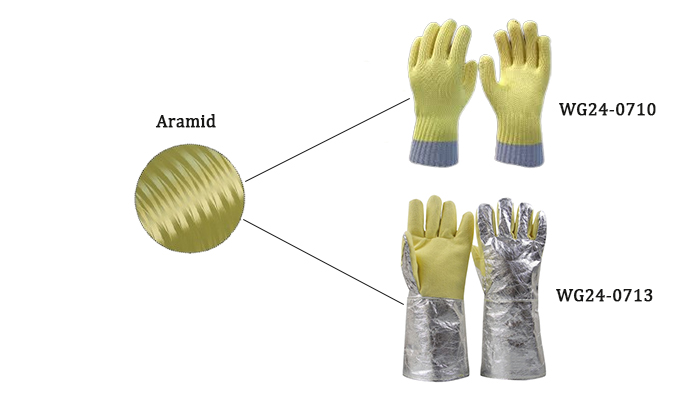
Cut-resistant material 1:Aramid
Aramid is a high-performance man-made fiber with a relatively stiff polymer chain molecular structure and very high thermal stability, which allows it to be used in many environments that require high-temperature protection, up to 500°C. It is also used as an anti-cutting material in a wide range of applications.
Properties of aramid fibers:
-High strength, high abrasion resistance, high tear resistance
-Good resistance to organic solvents
-Non-conductive
-No melting point in case of fire
-High thermal stability
-Heat-resistant and flame-retardant
-Low thermal conductivity
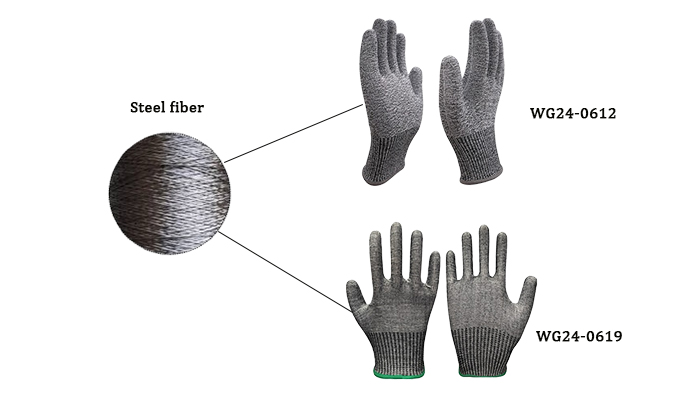
Cut-resistant material 2: Steel fiber
Derived from stainless steel, steel fiber offers high-strength cut resistance. For its much heavier weight compared to other fibers, it is often combined with other cut-resistant fiber materials to provide a high level of cut resistance.
Properties of steel wire fibers:
-High cut resistance
-Good corrosion resistance
-Long-lasting performance
-Heavier mass
-Stiff texture
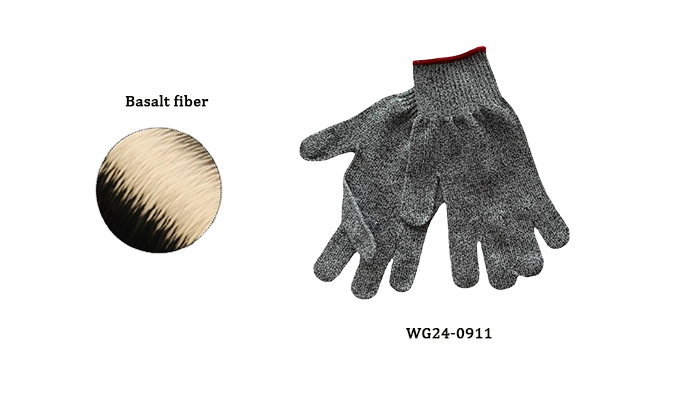
Cut-resistant material 3: Basalt fibre
Basalt fiber is extracted from crushed basalt rock and has better strength and higher resistance to acid, alkali, and salt than glass fiber.
Properties of basalt fiber:
-Naturally flame retardant
-High cut and tear strength
-Good abrasion resistance
-Excellent resistance to acids and alkalis
-Non-conductive
-Non-toxic and environmentally friendly
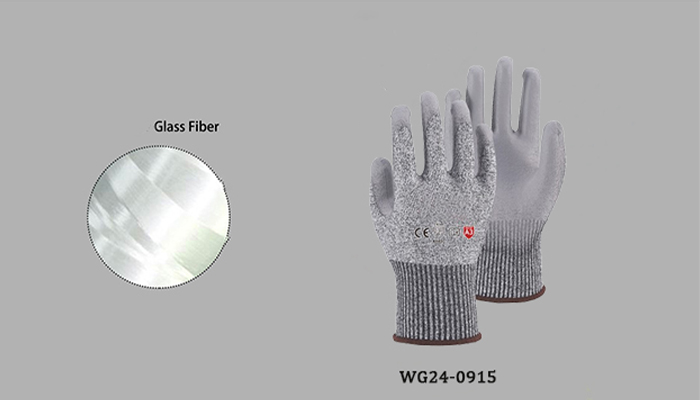
Cut-resistant material 4: Glass Fiber
Glass fiber is a well-known type of fiber that is widely used in cut-resistant gloves. Glass fiber has a smooth, cool, silky surface and is used to produce gloves with high levels of comfort and user acceptance.
Properties of glass fiber:
-Cut resistant
-Fire resistance
-Water-resistant
-Insulation
-Lower price
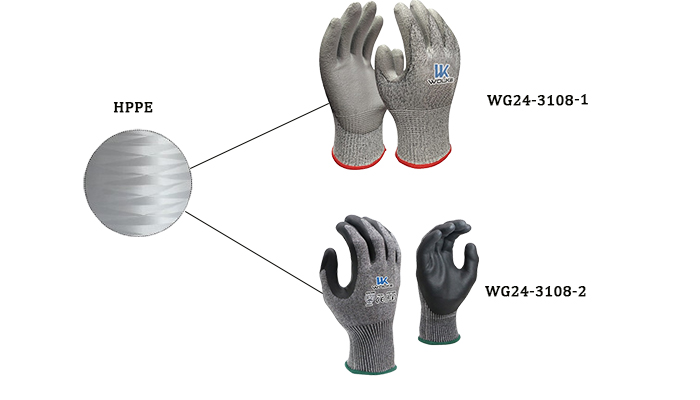
Cut-resistant material 5: High-Performance Polyethylene Fibre (HPPE)
HPPE fibers are extremely strong, approximately 15 times stronger than the same quality of high-quality steel. Due to the low density of the fibers, it is also flexible, lightweight, and durable. Gloves made exclusively from HPPE typically achieve a cut resistance level of B-C according to EN 388:2016.
Properties of HPPE fibers:
-High strength and modulus, high tensile strength
-Low fiber density and lightweight
-High cut resistance
-Resistant to abrasion, corrosion, and seawater
-UV and aging resistance
Wolkeglove has been committed to the research of new materials for anti-cutting and the development of new products for anti-cutting, aiming at high-cutting grade, lightweight, and comfortable hand feeling to create a new experience of senseless hand protection for workers. Please follow me, I will share more expertise about gloves, and the PPE industry.